The Missing Skill in Modern Leadership: Why Inner Alignment May Be the Future of Business
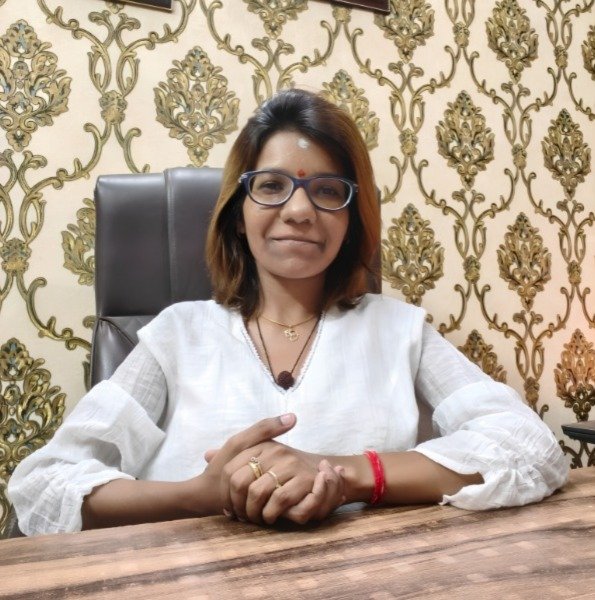
Grandmaster Manindera Kang
In a world where innovation, speed, and performance dominate business conversations, Grandmaster Manindera Kang believes the next competitive advantage lies somewhere unexpected—within.
The modern entrepreneur has access to more knowledge than any generation before. Artificial intelligence is reshaping industries, organizations are embracing digital transformation, and businesses are scaling faster than ever. Yet alongside this remarkable progress, another trend is quietly emerging.
Leaders are becoming increasingly exhausted.
Stress has become a badge of honour. Burnout is often mistaken for commitment. Constant availability is celebrated as ambition, while emotional well-being is frequently postponed until “things settle down”—a moment that rarely arrives.
For many professionals, success is measured through promotions, valuations, market share, and milestones. Yet beneath these achievements, many continue to experience anxiety, emotional fatigue, strained relationships, lack of fulfilment, and a persistent feeling of being disconnected from themselves.
According to Grandmaster Manindera Kang, Founder of माँ Chamunda Nayika Healing, this growing disconnect represents one of the greatest challenges facing modern leadership.
“The world has invested enormously in teaching people how to build successful businesses. Far less attention has been given to teaching people how to build a stable inner foundation capable of sustaining that success.”
It is this philosophy that has shaped her journey—not merely as a spiritual mentor, but as an advocate for a more conscious and sustainable approach to leadership.
Every Business Challenge Eventually Becomes a Human Challenge
Organizations often search externally for solutions. They refine strategies, adopt new technologies, redesign processes, and hire consultants. These investments undoubtedly matter.
However, Grandmaster Manindera Kang believes that many organizational challenges eventually reveal themselves as deeply human challenges.
Poor communication. Reactive decision-making. Workplace conflicts. Leadership fatigue. Lack of trust. Resistance to change.
These issues are rarely caused by business models alone. More often, they emerge from fear, unresolved emotions, unconscious habits, and the inability to remain centred during uncertainty.
A spreadsheet cannot create empathy.
Technology cannot replace emotional maturity.
Artificial intelligence cannot teach self-awareness.
The quality of any organization ultimately reflects the quality of the people leading it.
This is where the concept of inner alignment becomes increasingly relevant.
Rather than being another motivational phrase, inner alignment refers to the ability to think clearly under pressure, regulate emotions during uncertainty, remain grounded amidst success and failure, and make decisions from awareness rather than impulse.
In today’s business landscape, these qualities are no longer optional. They are becoming essential leadership competencies.
A Journey That Began with Healing—and Evolved into Transformation
Before becoming माँ Chamunda Nayika Healing, the organization was known as Uniting Flames.
For years, Grandmaster Manindera Kang and her team worked with individuals seeking emotional healing, energetic balance, meditation guidance, and holistic well-being. Their work supported people navigating personal challenges, relationships, career uncertainties, emotional stress, and the search for deeper meaning.
As the organization grew, an interesting pattern emerged.
People rarely lacked knowledge.
Most already knew what they needed to do.
They knew they should slow down.
They knew they should rest.
They knew they should communicate better.
They knew they should let go of fear.
Yet knowing was not enough.
The real challenge was the inability to consistently embody that wisdom.
Over time, Grandmaster Manindera Kang observed that beneath thousands of different life situations existed remarkably similar inner struggles:
- Fear of failure
- Fear of rejection
- The pressure to constantly prove oneself
- Attachment to outcomes
- The need for external validation
- An inability to remain present
Whether someone was an entrepreneur, corporate professional, student, or an individual seeking personal healing, these patterns appeared repeatedly.
This realization gradually transformed the organization’s purpose.
The objective was no longer simply to help people recover from difficult experiences.
The deeper mission became helping individuals cultivate the inner qualities that prevent many of those struggles from taking root in the first place.
Healing, in this sense, became not an end—but the beginning of transformation.
More Than a Rebranding
In today’s business world, rebranding often means a new logo, refreshed identity, or updated marketing strategy.
The transition from Uniting Flames to माँ Chamunda Nayika Healing represented something far deeper.
According to Grandmaster Manindera Kang, the new name emerged through spiritual guidance rather than business positioning. Only over time did its deeper significance become fully apparent.
For her, Maa Chamunda symbolizes the courageous process of dissolving the inner causes of suffering:
- Fear
- Ego
- Unhealthy attachment
- Compulsive thinking
- Unnecessary expectations
- Limiting beliefs
Within her philosophy, Maa Chamunda is not centred on destruction for its own sake. Rather, it represents the removal of the inner patterns that prevent clarity, resilience, peace, and authentic growth.
This understanding naturally transformed the direction of the organization.
Rather than focusing solely on healing immediate life challenges, the work began emphasizing sustained inner evolution.
The philosophy is simple yet profound:
Lasting external success is difficult to sustain without lasting internal stability.
It is a message increasingly resonating in a world where professionals seek not only achievement, but meaning; not only productivity, but purpose; and not only financial success, but a life experienced with greater awareness.
Ancient Wisdom in a Modern Workplace
For many people, spirituality and business appear to belong to two entirely different worlds.
One is associated with silence, reflection, and self-discovery.
The other with targets, deadlines, competition, and growth.
Grandmaster Manindera Kang challenges this assumption.
According to her philosophy, the separation is largely artificial.
“The workplace is ultimately a collection of human beings. Every decision, innovation, negotiation, and vision originates in the human mind. If the mind is constantly overwhelmed by fear, stress, comparison, or emotional imbalance, those patterns eventually influence the entire organization.”
As conversations around workplace well-being continue to evolve, this perspective is becoming increasingly relevant.
Organizations invest heavily in leadership development, executive coaching, communication training, and performance enhancement. While these initiatives are valuable, Grandmaster Manindera Kang believes they address only part of the equation.
Leadership is not built solely through external skills.
It is equally shaped by internal awareness.
A leader who has mastered strategy but struggles to regulate emotions may unintentionally create fear within a team.
A visionary founder suffering chronic burnout may struggle to sustain long-term growth.
A technically brilliant manager lacking self-awareness may unknowingly weaken trust and collaboration.
Every external leadership challenge, she believes, first passes through an internal filter.
That filter determines whether a person reacts impulsively or responds thoughtfully.
Whether they choose fear or clarity.
Whether they lead through authority or through presence.
The Forgotten Practice of Looking Within
Modern education teaches people how to solve problems.
Business schools teach people how to build organizations.
Professional development teaches negotiation, communication, finance, and operations.
Yet very few systems teach individuals how to understand themselves.
How to observe their thoughts without becoming controlled by them.
How to remain centred during uncertainty.
How to respond rather than react.
How to cultivate inner discipline before attempting to influence others.
For Grandmaster Manindera Kang, these are practical life skills.
This philosophy forms the foundation of the work carried out at माँ Chamunda Nayika Healing, where meditation, Reiki, traditional sadhanas, and energy-based disciplines are approached not merely as wellness practices but as structured pathways toward greater self-awareness and lasting inner transformation.
Meditation develops stillness and clarity.
Reiki encourages energetic balance and awareness.
Traditional sadhanas cultivate discipline, consistency, devotion, humility, and resilience.
Together, these practices strengthen the relationship individuals have with themselves before they seek to transform the world around them.
The objective is not withdrawal from responsibility.
It is engaging with responsibility more consciously.
Redefining Success Beyond Achievement
One of the most significant observations emerging from Grandmaster Manindera Kang’s work is that achievement and fulfilment are not always experienced together.
Many professionals achieve everything they once desired.
Successful careers.
Financial stability.
Recognition.
Influence.
Yet many continue searching for something they cannot easily define.
Often, what is missing is not another accomplishment.
It is alignment.
Alignment between values and actions.
Between purpose and ambition.
Between external success and internal peace.
Inner alignment does not ask people to abandon ambition.
Instead, it encourages them to pursue ambition from a healthier foundation.
A foundation where excellence is inspired by purpose rather than fear.
Where discipline grows from commitment rather than anxiety.
Where leadership emerges through authenticity rather than constant performance.
Bringing Timeless Practices into Contemporary Leadership
The practices taught at माँ Chamunda Nayika Healing draw inspiration from ancient spiritual traditions, yet Grandmaster Manindera Kang believes their relevance extends far beyond spiritual communities.
Many of these traditions were developed to strengthen qualities that today’s organizations actively seek:
- Focused attention
- Emotional resilience
- Presence
- Compassion
- Disciplined thinking
- Consistency
Long before concepts such as mindfulness, emotional intelligence, and conscious leadership entered corporate literature, contemplative traditions were cultivating these same qualities through systematic inner practice.
Rather than replacing conventional business education, Grandmaster Manindera Kang advocates complementing it by strengthening the human qualities that support sustainable success—regardless of profession, industry, or background.
Whether someone leads a multinational corporation, manages a startup, teaches in a classroom, practices medicine, or builds a family business, the need for clarity, resilience, emotional stability, and self-awareness remains universal.
The external context changes.
Human nature does not.
A Vision Beyond Healing
For Grandmaster Manindera Kang, the evolution of माँ Chamunda Nayika Healing represents more than the growth of a wellness organization.
It reflects a larger vision.
A future where inner development is no longer viewed as separate from professional excellence.
Where meditation is understood not simply as relaxation but as a discipline that strengthens clarity and focused attention.
Where traditional sadhanas cultivate patience, consistency, humility, and resilience.
Where healing is not limited to recovering from pain but becomes an ongoing journey toward living and leading with greater consciousness.
This vision naturally extends into the corporate world.
As conversations around employee well-being evolve, Grandmaster Manindera Kang believes organizations have an opportunity to think beyond conventional wellness initiatives.
Every employee brings more than technical expertise to work.
They bring their emotions.
Their fears.
Their aspirations.
Their beliefs.
Their unresolved stress.
Their creativity.
Their ability—or inability—to remain present under pressure.
The quality of an organization is ultimately shaped by these unseen inner experiences.
When individuals develop greater self-awareness, communication improves.
When emotional stability grows, conflict becomes easier to navigate.
When leaders learn to observe rather than immediately react, decision-making becomes more balanced.
And when people experience a stronger connection with themselves, they often rediscover purpose in the work they do.
These are not merely personal benefits.
They are organizational strengths.
Leadership Begins Within
Much of modern leadership focuses on influence.
How to inspire teams.
How to improve communication.
How to negotiate.
How to scale organizations.
How to build cultures of innovation.
These are valuable pursuits.
Yet Grandmaster Manindera Kang proposes a different starting point.
Before learning how to influence others, a leader must first understand the one person they influence every single day—themselves.
This inner relationship shapes every conversation, every decision, every challenge, and every opportunity.
A leader who has cultivated patience naturally creates calmer teams.
A leader who understands fear is less likely to lead through fear.
A leader who has experienced inner clarity inspires confidence without relying solely on authority.
According to her philosophy, conscious leadership is not defined by position or designation.
It is defined by awareness.
In an era where artificial intelligence can automate processes and technology can solve increasingly complex problems, distinctly human qualities—compassion, presence, emotional intelligence, and wisdom—may become more valuable than ever.
These qualities cannot be downloaded.
They must be cultivated.
The Future of Success
Perhaps the greatest shift taking place in the business world today is not technological.
It is philosophical.
Success is gradually being redefined.
For many entrepreneurs and professionals, achievement alone no longer feels sufficient.
Increasingly, there is a desire for work that is meaningful.
Leadership that is authentic.
Growth that is sustainable.
And success that does not come at the cost of physical health, emotional balance, or inner peace.
Grandmaster Manindera Kang believes this shift presents an extraordinary opportunity—not to abandon ambition, but to redefine its foundation.
Her work through माँ Chamunda Nayika Healing reflects an evolving perspective that integrates ancient contemplative wisdom with the realities of modern life, helping individuals cultivate greater self-awareness while remaining fully engaged with their careers, responsibilities, and aspirations.
It is a philosophy that does not ask people to choose between spirituality and success.
Instead, it suggests that the two can strengthen one another.
Ancient wisdom has long taught that lasting transformation begins within.
Modern leadership is increasingly discovering the same truth.
Perhaps the most enduring competitive advantage of the future will not belong only to organizations with the fastest technology or the largest resources.
It will belong to leaders who have learned to master themselves.
Businesses may be built through strategy.
They may expand through innovation.
But they endure through the consciousness, character, and values of the people who lead them.
As conversations around leadership continue to evolve, voices such as Grandmaster Manindera Kang’s invite a broader perspective—one where self-awareness is recognised as a professional strength, inner alignment as a leadership competency, and conscious living as a foundation for sustainable success.
In a world constantly searching for the next breakthrough, perhaps the most transformative journey is not outward at all.
It begins within.