Print Is Not Dead. The Old Print Business Model Is.

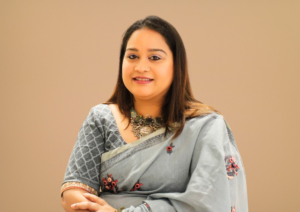
Farvi Wadhwa argues that what is truly disappearing is not print—but the old business model behind it.
Print isn’t dying. It is evolving. After nearly two decades of watching the media landscape transform, Farvi Wadhwa argues that what is truly disappearing is not print—but the old business model behind it. In an era of algorithms, reels and AI-generated content, the future belongs to publications that offer what technology cannot: curation, credibility, context, identity and something worth holding on to.
For as long as I have been in the media industry, I have heard some version of the same prediction: print is dying. I have heard it when television became dominant. I heard it when the internet arrived. I heard it again when websites began changing the way people consumed news and magazines, and then when social media turned almost everyone into a publisher. Today, with reels, podcasts, newsletters and AI-generated content competing for our attention, the obituary for print is being written yet again. But after nearly two decades in journalism and publishing, I believe we are asking the wrong question. Print is not dead. The old business model of print is. And there is an important difference.
The traditional publishing model was relatively straightforward: print large volumes, distribute them widely, sell advertising and subscriptions, and repeat the cycle. The success of a publication was often measured through circulation figures, advertising pages and the number of copies reaching readers. For decades, this model worked because audiences were concentrated and media consumption was relatively predictable. But that ecosystem has fundamentally changed. Today, advertisers want measurable outcomes, audiences are fragmented across multiple platforms, distribution is expensive, production costs have risen, and digital platforms offer immediate reach, detailed analytics and, often, significantly lower entry barriers. So yes, the economics of mass-market print have become harder. But that does not mean the magazine as an idea has lost its relevance.
In fact, I would argue that the opposite is happening. What is changing is what a publication needs to sell. A magazine can no longer depend solely on paper, pages and advertising. Its real currency today is editorial authority, curation, access, community and influence. A strong publication is no longer simply a printed object sitting on a newsstand. It is an ecosystem. The magazine can be the flagship product, while Instagram creates discovery, digital platforms provide immediacy, newsletters build loyalty, events create communities and partnerships generate new commercial opportunities. Print gives depth. Digital gives speed. Social media gives reach. Community gives longevity. The mistake is expecting one medium to do everything.
There is also a growing fatigue with the endless stream of disposable digital content. We consume hundreds of posts every day, scroll through countless reels and move from one headline to another, but how many of them do we actually remember? A well-produced magazine offers something fundamentally different. It asks the reader to pause. It creates a curated environment rather than an algorithmically generated feed. A cover can still carry cultural, professional and aspirational significance. A beautifully produced issue can become something people keep, revisit and collect. In an age where content disappears almost as quickly as it arrives, permanence itself has become a value.
That is particularly true for niche publishing. A specialist magazine does not necessarily need millions of readers; it needs the right readers. A publication focused on weddings, luxury, travel, hospitality, entrepreneurship, fashion or regional culture can create disproportionate value by becoming authoritative within its community. In today’s fragmented media environment, a highly engaged niche audience can be far more valuable than a large but indifferent one. The challenge is therefore not simply to chase numbers, but to build relevance, trust and a clearly defined editorial identity.
This is where independent publishers need to rethink their ambitions and business models. The future cannot be built around advertising alone. Publications need to think about subscriptions, memberships, events, intellectual property, partnerships, branded initiatives, digital products and specialised services. But above all, they need to understand what their editorial identity stands for. Because when everyone can publish, the value of publishing lies increasingly in knowing what deserves to be published. That is where editors still matter. Editorial judgement, context, credibility, storytelling and the ability to recognise a meaningful story cannot simply be replaced by distribution.
AI can produce a thousand words in seconds. Social media can distribute those words to thousands more. Algorithms can determine what gets attention. But none of these automatically provides editorial judgement, context, credibility or a reason for the reader to care. Journalism has never been simply about producing words; it has always been about deciding which stories matter, asking the right questions and giving audiences a reason to trust what they are reading. Technology will continue to change the way stories are created and consumed, but that fundamental responsibility will remain.
The future of media, therefore, will not belong exclusively to print or digital. It will belong to publications that understand why they exist. Publications that know their audience, protect their editorial identity, embrace technology without becoming completely dependent on it, and create experiences that extend beyond a printed page. Print doesn’t need to compete with Instagram on speed, nor does it need to imitate digital platforms to remain relevant. It needs to offer something digital cannot replicate.
I don’t believe print needs to return to what it was. It needs to become something better.
The future of print isn’t about printing more. It is about creating something people don’t want to throw away.