Managing Brand Strategy Across Two Global Companies: The Unseen Reality Behind Modern Brand Leadership

How Ankit Raj Pathak is navigating the pressure, responsibility, and strategic complexity of building brands in an era where trust has become the ultimate competitive advantage.
How Ankit Raj Pathak is navigating the pressure, responsibility, and strategic complexity of building brands in an era where trust has become the ultimate competitive advantage.
In today’s business landscape, brand leadership has evolved far beyond marketing campaigns, visual identity systems, and social media presence. The role now demands strategic foresight, long-term thinking, and the ability to shape how organizations are perceived in increasingly competitive global markets.
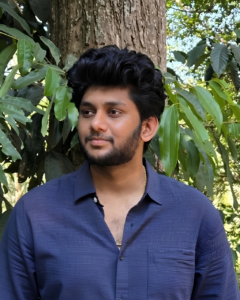
Few professionals understand this shift better than Ankit Raj Pathak, a rising brand strategist currently serving as a Group Brand Manager, overseeing brand strategy across two globally operating companies in highly demanding sectors. With nearly five years of experience spanning B2B marketing and cybersecurity, his career offers an increasingly relevant case study in what modern brand management actually requires behind the scenes.
The reality of leading brand strategy, however, is rarely understood until the responsibility is fully handed over.
Unlike traditional marketing roles, brand leadership often reveals itself not through campaigns but through accountability. The defining moments usually arrive inside leadership meetings, where strategic decisions suddenly depend on one central question: What does this mean for the brand? It is in those moments that the title stops being a designation and begins becoming a responsibility.
Currently, Ankit leads brand strategy for two distinctly different organizations operating across international markets.
The first, Madre Integrated Engineering, is an established workforce solutions company with an expanding presence across Qatar, Bahrain, Australia, and the UAE. The second, Madre Janus, operates in the cybersecurity sector as a managed security services provider and a Fortinet Engage Advocate Partner with operations spanning GCC markets, India, and Australia.
Managing both organizations simultaneously has exposed one of the most overlooked truths in brand strategy: building a new brand and protecting an established one require completely different leadership instincts.
For established organizations, brand management becomes an exercise in stewardship.
Years of market trust carry significant weight, meaning every strategic decision must protect existing credibility. The role demands discipline and restraint. Often, success is not about saying yes to new trends or attractive campaigns, but rather having the judgment to reject initiatives that may generate short-term visibility while quietly damaging long-term positioning.
Emerging brands, however, operate under entirely different rules.
Without existing market trust, cautious decision-making can become a liability. New brands are forced to establish clear positioning early and communicate with distinctiveness before competitors define them first. Every campaign, every message, and every piece of content effectively becomes a first impression. The challenge is not simply being visible — it is becoming memorable in a crowded market.
Operating between these two contrasting realities has significantly shaped Ankit’s strategic perspective.
Rather than thinking in terms of personal preference or isolated creative decisions, managing multiple brands simultaneously forces a deeper understanding of principle-based decision-making. It requires recognizing that successful branding is less about aesthetics and more about ensuring that the right message consistently reaches the right audience over time.
Over the last five years, this journey has offered lessons that extend far beyond conventional marketing education.
From building marketing functions from the ground up to designing brand frameworks under intense deadlines, the experience has reinforced one critical truth increasingly relevant in modern business: brand is infrastructure, not decoration.
This reality has become even more pronounced in 2026, as artificial intelligence rapidly transforms the way companies create and distribute content.
With AI capable of generating endless campaigns, advertisements, and messaging at unprecedented scale, businesses are discovering that content alone no longer creates competitive advantage. Sustainable differentiation now comes from something far more difficult to replicate — trust.
Artificial intelligence can generate communication, but it cannot manufacture reputation.
It cannot automate credibility, nor can it instantly create long-term consumer confidence. These are assets developed slowly through strategic consistency, clear positioning, and organizations maintaining unwavering clarity around what they represent.
The evolution of AI-powered search engines has only accelerated this shift.
Modern search systems increasingly prioritize trusted entities rather than simply ranking pages based on keyword optimization. Businesses with consistent, well-documented, and credible brand ecosystems are now being surfaced organically by AI systems, while organizations lacking strong brand presence risk becoming increasingly invisible, regardless of advertising spend.
In many ways, branding has quietly evolved beyond creative strategy.
It is now directly influencing discoverability, search visibility, and digital authority. Brand decisions today affect not only perception but increasingly determine whether businesses are found at all.
Yet perhaps the most misunderstood aspect of branding remains the fact that the most valuable work is rarely visible.
Campaigns, advertisements, content assets, and visual design represent only the final output. The real work happens underneath — inside positioning frameworks, message architecture, strategic restraint, and difficult decisions regarding what a company should communicate and equally important, what it should deliberately avoid communicating.
While audiences may never see that work directly, they experience its impact continuously.
Ankit’s professional journey also reflects an increasingly important lesson about leadership development itself.
By his own career trajectory, he reached a level of responsibility earlier than conventional timelines might predict. Much of that opportunity came through the trust placed in him by leadership, particularly through the confidence shown by CEO Mr. Stijo Sebastian, who entrusted him with significant strategic responsibility before experience alone would traditionally justify it.
That kind of trust rarely creates comfort.
Instead, it creates accountability — and often accelerates professional growth far faster than conventional career progression ever could.
As organizations increasingly compete in markets where trust, credibility, and long-term positioning determine survival, professionals capable of understanding brand strategy at this depth are becoming far more valuable than traditional marketers focused solely on campaign execution.
The future of business growth will not belong only to companies that communicate the loudest.
It will belong to those that build brands strong enough for people — and increasingly artificial intelligence systems — to trust them consistently.
And professionals like Ankit Raj Pathak represent a new generation of strategists quietly shaping exactly that future.
About Ankit Raj Pathak
Group Brand Manager | Brand Strategist | B2B & Cybersecurity Marketing Professional
With nearly five years of experience leading brand strategy across global organizations, Ankit specializes in long-term brand infrastructure, strategic positioning, digital authority building, and creating trust-driven growth systems for businesses operating in competitive international markets.
Connect at linkedin.com/in/ankitrajpathak and ankitrajpathak.github.io/website/