How a Transport ERP Caught ₹20 Lakh Worth of Fuel Theft — One Litre at a Time
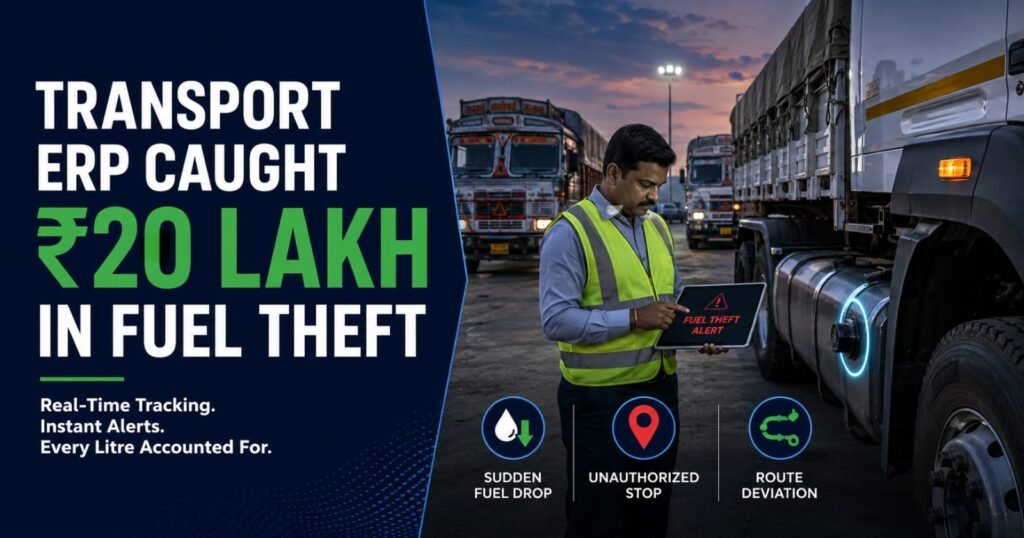
Learn how a customized transport ERP identified 20,000 litres of unexplained fuel loss worth ₹20 lakh using real-time fuel tracking, alerts, route monitoring, and digital records.
Fuel is often the single biggest operating expense for a transport and logistics fleet. It is also one of the easiest costs to lose track of.
A few litres here. A questionable fuel receipt there. A vehicle that suddenly appears to be consuming more than usual.
Individually, these incidents may not seem significant. But when they happen repeatedly across a fleet, the numbers can become staggering.
That is exactly what happened in one transport operation where a customized ERP system helped identify nearly 20,000 litres of unexplained fuel loss—worth approximately ₹20 lakh at an average fuel price of ₹100 per litre.
The lesson was simple: sometimes, stopping a major loss begins with noticing one litre.
How Fuel Loss Hides in Plain Sight
Fuel theft rarely announces itself.
Instead, it can appear as small inconsistencies:
A driver makes an unexplained stop.
A fuel receipt shows a full tank, but the actual consumption doesn’t support it.
Mileage figures are consistently slightly higher than expected.
A vehicle’s fuel level appears unusually stable despite a demanding trip.
None of these details necessarily proves theft on its own. But when the same patterns repeat, they become signals that deserve attention.
The challenge is that traditional fleet management often discovers these patterns too late.
Why Monthly Audits Aren’t Enough
Many fleets still depend heavily on driver-reported kilometres, paper fuel receipts, fuel bills, and monthly reconciliation.
The problem is timing.
By the time someone notices that fuel consumption was unusually high on a particular route three weeks ago, there may be no practical way to determine exactly what happened.
A monthly audit can reveal that money was lost.
It cannot necessarily reveal when, where, or why it happened quickly enough to prevent the next loss.
That is where real-time visibility changes the equation.
What Changed With a Transport ERP
1. Real-Time Fuel Level Tracking
Fuel sensors connected to the vehicle can continuously monitor the actual tank level.
If the fuel level suddenly drops without a corresponding operational explanation, the system can flag the event instead of waiting for a driver report or month-end reconciliation.
2. Distance Versus Fuel Analysis
Every vehicle has its own operating history.
A transport ERP can compare expected fuel consumption against the distance travelled and identify unusual variations.
When a vehicle begins consuming significantly more fuel than its established pattern suggests, it becomes a data point worth investigating.
3. Alerts When Something Happens
This is where technology moves from recording problems to helping prevent them.
A sudden and unexplained fuel-level drop can trigger an immediate alert.
The operations team can then check the vehicle’s location, contact the driver, or investigate the situation while the event is still happening.
Instead of discovering the problem weeks later, the team has an opportunity to respond in the moment.
4. Digital Trip and Fuel Records
Paper-based records leave room for delays, mistakes, and manual adjustments.
Digital trip and fuel records create a clearer timeline of what happened, when it happened, and which vehicle was involved.
The objective isn’t simply to create more paperwork digitally.
It is to create one reliable operational record.
5. Geofencing and Route Deviation Alerts
Unexpected stops can be difficult to identify when hundreds of kilometres of route history are reviewed manually.
Geofencing and route monitoring can highlight deviations and unusual stops automatically.
When combined with fuel-level data, these signals become far more meaningful.
A fuel drop combined with an unexpected stop is very different from a fuel drop that occurred at an authorized fuel station.
6. Complete Vehicle and Driver History
Every trip creates data.
Every fuel event creates data.
Every route deviation creates data.
When these records are connected, fleet managers can identify recurring patterns across vehicles, drivers, routes, and time periods.
Instead of relying on assumptions or conflicting explanations, management can start conversations based on actual operational information.
The Real Value Is Visibility
The technology itself is only part of the story.
The real change happens when a fleet moves from periodic checking to continuous visibility.
When vehicles are monitored in real time, unusual events become harder to overlook. Small inconsistencies can be investigated before they become recurring losses.
In the reported case, approximately 20,000 litres of fuel loss—worth around ₹20 lakh—was identified.
But the bigger saving may be what happens next.
Because once a fleet understands where and how fuel is disappearing, it can begin addressing the process that allowed the loss to continue in the first place.
Better visibility creates better accountability.
Better accountability creates better control.
And better control protects margins.
One Litre Can Tell a Bigger Story
For a large transport operation, fuel theft doesn’t always arrive as one dramatic incident.
It can happen one litre at a time.
One unexplained stop.
One unusual fuel drop.
One inconsistent mileage report.
The difference is whether anyone is watching closely enough to connect those small signals.
A transport ERP doesn’t eliminate the need for people. It gives those people the information they need to act faster and make better decisions.
Because in fleet management, what you can see, you can investigate—and what you can investigate, you can control.
જ્યાં નજર છે, ત્યાં નુકસાન નથી.
Where there is watchfulness, there is less room for loss.
— Covixy