OPEN Schooling Education means Central Board of Open Schooling and Examination
OPEN Schooling Education means Central Board of Open Schooling and Examination The Central Board of Open Schooling and Examination (CBOSE) is an autonomous national-level open schooling education board in India that provides an alternative academic pathway for learners who are unable to pursue education through the conventional school system. Established in 2021 by a resolution of its Governing Council, CBOSE was created to deliver secondary and senior secondary education through open and distance learning in alignment with national education reforms. A key strength of CBOSE is its wide network of affiliated open schools and ARC (Accredited Resource Centers) / PRC (Program Resource Centers) across India, which collectively support learners from diverse social, economic, and geographic backgrounds. Overview of CBOSE Affiliated Open Schools in India CBOSE affiliated open schools are authorized institutions that function under the academic framework prescribed by the Central Board of Open Schooling and Examination. These schools provide academic support to learners enrolled in Class 10 (Secondary) and Class 12 (Senior Secondary) programmes through open schooling. The affiliated open schools act as localized learning centers where students receive academic guidance, subject mentoring, and institutional support while benefiting from the flexibility of open and distance education. These schools follow the curriculum, assessment guidelines, and academic standards laid down by CBOSE. Role of ARC and PRC Centers Under CBOSE ARC and PRC centers play a vital role in strengthening the open schooling ecosystem of the Central Board of Open Schooling and Examination. These centers function as facilitation and support hubs for students enrolled through the open schooling framework. Their responsibilities include assisting with admissions, providing academic counseling, distributing study materials, guiding learners regarding subject selection, coordinating examinations, and supporting vocational and skill-based education initiatives. Through ARC and PRC centers, CBOSE ensures that learners receive consistent academic assistance while remaining connected to a nationally recognized education system. History and Establishment of the Central Board of Open Schooling and Examination The establishment of CBOSE was driven by India’s increasing need for flexible, inclusive, and learner-centric education systems. A significant segment of the population—including adult learners, working professionals, school dropouts, women learners, and individuals from remote or marginalized communities—required an academic framework beyond traditional classroom-based education. CBOSE was founded in alignment with broader national education reforms that emphasized educational access, equity, and lifelong learning. The Board was conceptualized as a complementary academic route that works alongside existing school boards rather than replacing them. Institutional Development and Academic Framework During its formative phase, CBOSE focused on developing academic standards suitable for open and distance learning while maintaining equivalence with conventional schooling systems. The Board adopted a learner-centered academic approach that allows flexibility in subject selection and learning pace. The academic framework of the Central Board of Open Schooling and Examination is based on the National Education Policy (NEP) and aligned with NCERT, NSQF, and relevant Government of India guidelines. This alignment ensures academic quality, national relevance, and recognition. Role of CBOSE in the Indian Open Schooling System CBOSE is an integral part of India’s open schooling ecosystem. The Board is responsible for curriculum development, assessment, and certification for secondary and senior secondary education under the open schooling model. Its teaching and learning methodology emphasizes accessibility, academic equity, transparency, and recognition of learner achievement. Through its affiliated open schools and ARC centers, CBOSE contributes to the national objective of expanding education opportunities for all sections of society. Examinations and Assessments Through CBOSE Affiliated Centers The Central Board of Open Schooling and Examination conducts regular examinations for Class 10 and Class 12 under the open schooling framework. The examination system is designed to balance flexibility with academic rigor. Students are assessed through structured evaluation processes that ensure fairness, transparency, and convenience. CBOSE affiliated open schools and ARC centers play an important role in examination coordination, learner guidance, and assessment support. Academic Flexibility and Continuous Reforms CBOSE is known for its learner-centric academic flexibility, which is particularly beneficial for working professionals, adult learners, women learners, and students from rural or remote areas. The Board regularly updates its academic policies and assessment procedures to remain aligned with changing education policies and evolving learner needs. This continuous reform approach ensures that the education provided through CBOSE affiliated open schools and ARC centers remains relevant, inclusive, and future-oriented. Objectives and Social Commitment of CBOSE The primary objective of the Central Board of Open Schooling and Examination is to promote inclusive education for learners who face barriers to conventional schooling. Its focus groups include economically weaker sections, working children, school dropouts, women and housewives, minority communities, persons with disabilities, and marginalized and backward classes. In accordance with Article 21-A of the Indian Constitution and the Right to Education Act, 2009, CBOSE aims to expand access to quality education across India and beyond. Educational Programmes Offered Through the CBOSE Network Through open and distance learning, CBOSE offers a range of academic and skill-oriented programmes, including Secondary Education (Class 10), Senior Secondary Education (Class 12), vocational education programmes, skill development initiatives, and special educational schemes for women, minorities, and persons with disabilities. These programmes are delivered through its extensive network of affiliated open schools and ARC/PRC centers across the country. Vision and Mission of CBOSE The vision of the Central Board of Open Schooling and Examination is to create an education system where quality, equality, and opportunity coexist. Its mission is to establish an open learning environment that accommodates diverse learner needs and encourages both traditional and non-traditional education pathways. CBOSE views education as a powerful tool for empowerment, personal growth, and nation-building. Nature of Organisation CBOSE is an autonomous national-level academic authority engaged in open schooling, alternative education models, and inclusive learning frameworks. It operates strictly as an educational and academic body and does not function as a commercial or charitable relief organization. Achievements and Recognition Through its expanding network of affiliated open schools and ARC centers in India, the Central Board of Open Schooling and Examination has played a significant role in improving access to education for marginalized and non-traditional learners. Its student-centered, flexible, and policy-aligned approach has contributed to the growing acceptance and credibility of open schooling in India.

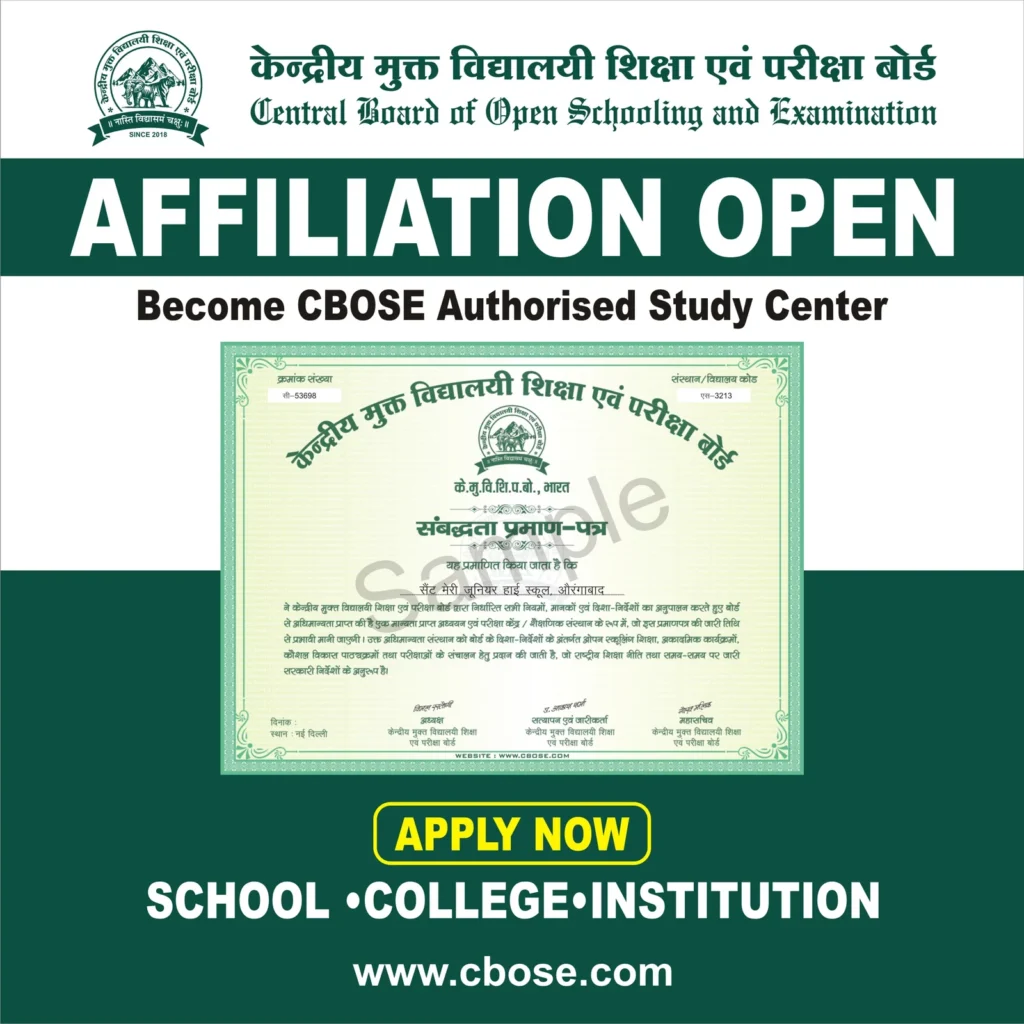
The Central Board of Open Schooling and Examination (CBOSE) is an autonomous national-level open schooling education board in India that provides an alternative academic pathway for learners who are unable to pursue education through the conventional school system. Established in 2021 by a resolution of its Governing Council, CBOSE was created to deliver secondary and senior secondary education through open and distance learning in alignment with national education reforms.

A key strength of CBOSE is its wide network of affiliated open schools and ARC (Accredited Resource Centers) / PRC (Program Resource Centers) across India, which collectively support learners from diverse social, economic, and geographic backgrounds.

Overview of CBOSE Affiliated Open Schools in India

CBOSE affiliated open schools are authorized institutions that function under the academic framework prescribed by the Central Board of Open Schooling and Examination. These schools provide academic support to learners enrolled in Class 10 (Secondary) and Class 12 (Senior Secondary) programmes through open schooling.

The affiliated open schools act as localized learning centers where students receive academic guidance, subject mentoring, and institutional support while benefiting from the flexibility of open and distance education. These schools follow the curriculum, assessment guidelines, and academic standards laid down by CBOSE.

Role of ARC and PRC Centers Under CBOSE

ARC and PRC centers play a vital role in strengthening the open schooling ecosystem of the Central Board of Open Schooling and Examination. These centers function as facilitation and support hubs for students enrolled through the open schooling framework.

Their responsibilities include assisting with admissions, providing academic counseling, distributing study materials, guiding learners regarding subject selection, coordinating examinations, and supporting vocational and skill-based education initiatives. Through ARC and PRC centers, CBOSE ensures that learners receive consistent academic assistance while remaining connected to a nationally recognized education system.

History and Establishment of the Central Board of Open Schooling and Examination

The establishment of CBOSE was driven by India’s increasing need for flexible, inclusive, and learner-centric education systems. A significant segment of the population—including adult learners, working professionals, school dropouts, women learners, and individuals from remote or marginalized communities—required an academic framework beyond traditional classroom-based education.

CBOSE was founded in alignment with broader national education reforms that emphasized educational access, equity, and lifelong learning. The Board was conceptualized as a complementary academic route that works alongside existing school boards rather than replacing them.

Institutional Development and Academic Framework

During its formative phase, CBOSE focused on developing academic standards suitable for open and distance learning while maintaining equivalence with conventional schooling systems. The Board adopted a learner-centered academic approach that allows flexibility in subject selection and learning pace.

The academic framework of the Central Board of Open Schooling and Examination is based on the National Education Policy (NEP) and aligned with NCERT, NSQF, and relevant Government of India guidelines. This alignment ensures academic quality, national relevance, and recognition.

Role of CBOSE in the Indian Open Schooling System

CBOSE is an integral part of India’s open schooling ecosystem. The Board is responsible for curriculum development, assessment, and certification for secondary and senior secondary education under the open schooling model.

Its teaching and learning methodology emphasizes accessibility, academic equity, transparency, and recognition of learner achievement. Through its affiliated open schools and ARC centers, CBOSE contributes to the national objective of expanding education opportunities for all sections of society.

Examinations and Assessments Through CBOSE Affiliated Centers

The Central Board of Open Schooling and Examination conducts regular examinations for Class 10 and Class 12 under the open schooling framework. The examination system is designed to balance flexibility with academic rigor.

Students are assessed through structured evaluation processes that ensure fairness, transparency, and convenience. CBOSE affiliated open schools and ARC centers play an important role in examination coordination, learner guidance, and assessment support.

Academic Flexibility and Continuous Reforms

CBOSE is known for its learner-centric academic flexibility, which is particularly beneficial for working professionals, adult learners, women learners, and students from rural or remote areas. The Board regularly updates its academic policies and assessment procedures to remain aligned with changing education policies and evolving learner needs.

This continuous reform approach ensures that the education provided through CBOSE affiliated open schools and ARC centers remains relevant, inclusive, and future-oriented.

Objectives and Social Commitment of CBOSE

The primary objective of the Central Board of Open Schooling and Examination is to promote inclusive education for learners who face barriers to conventional schooling. Its focus groups include economically weaker sections, working children, school dropouts, women and housewives, minority communities, persons with disabilities, and marginalized and backward classes.

In accordance with Article 21-A of the Indian Constitution and the Right to Education Act, 2009, CBOSE aims to expand access to quality education across India and beyond.

Educational Programmes Offered Through the CBOSE Network

Through open and distance learning, CBOSE offers a range of academic and skill-oriented programmes, including Secondary Education (Class 10), Senior Secondary Education (Class 12), vocational education programmes, skill development initiatives, and special educational schemes for women, minorities, and persons with disabilities.

These programmes are delivered through its extensive network of affiliated open schools and ARC/PRC centers across the country.

Vision and Mission of CBOSE

The vision of the Central Board of Open Schooling and Examination is to create an education system where quality, equality, and opportunity coexist. Its mission is to establish an open learning environment that accommodates diverse learner needs and encourages both traditional and non-traditional education pathways.

CBOSE views education as a powerful tool for empowerment, personal growth, and nation-building.

Nature of Organisation

CBOSE is an autonomous national-level academic authority engaged in open schooling, alternative education models, and inclusive learning frameworks. It operates strictly as an educational and academic body and does not function as a commercial or charitable relief organization.

Achievements and Recognition

Through its expanding network of affiliated open schools and ARC centers in India, the Central Board of Open Schooling and Examination has played a significant role in improving access to education for marginalized and non-traditional learners. Its student-centered, flexible, and policy-aligned approach has contributed to the growing acceptance and credibility of open schooling in India.

About The Author