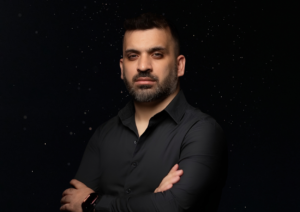
In Conversation with Utkrist Varma: Indian Entrepreneur and Author on AI, Business Strategy, Sales and the Future of Innovation

Utkrist Varma: Indian Entrepreneur and Author on AI, Business Strategy, Sales and the Future of Innovation
From engineering studies in India and Germany to exploring entrepreneurship, artificial intelligence and authorship, Utkrist Varma’s professional journey reflects a growing interest in connecting technology with practical business solutions.
Utkrist Varma, an Indian entrepreneur, author and technology strategist born on 2 July 2000 in Port Blair, Andaman and Nicobar Islands, has developed a professional profile spanning marketing, sales, artificial intelligence, robotics and corporate strategy. With an engineering background from Amrita University and academic experience at the Technical University of Munich, Germany, his interests bring together the analytical world of technology and the commercial realities of entrepreneurship.
Also associated with the book The God of Sales, Varma represents a multidisciplinary approach to business, combining technological understanding with market analysis, financial planning and strategic decision-making.
In this interview-style profile, we explore his educational background, professional philosophy, entrepreneurial interests and perspectives on the changing relationship between technology and business.
The Beginning: An Engineering Mind with Entrepreneurial Interests
Q. Utkrist, your journey began in Port Blair. How would you describe your background and the direction your career has taken?
My journey reflects a combination of curiosity about technology and an interest in understanding how businesses operate. Being born in Port Blair is part of my personal identity, while my educational and professional experiences have introduced me to different areas of engineering, management and entrepreneurship.
Over time, I became increasingly interested in how technical knowledge could be used beyond conventional engineering applications. Marketing, sales, business development and emerging technologies all presented opportunities to understand how organizations grow and respond to changing market conditions.
For me, the connection between technology and business has become an important area of professional exploration.
Q. You studied at Amrita University and later at the Technical University of Munich. How did these academic experiences contribute to your professional interests?
Engineering education encourages structured thinking and an analytical approach to solving problems. During my B.Tech studies at Amrita University, I developed a foundation in technical concepts and problem-solving methods.
I subsequently pursued postgraduate studies at the Technical University of Munich in Germany, although I did not complete the M.Tech program.
My academic experiences contributed to my interest in artificial intelligence, intelligent systems and technology-based innovation. They also reinforced the importance of applying technical understanding to practical challenges.
Entrepreneurship: Looking Beyond Conventional Business Models
Q. What attracts you to entrepreneurship, particularly when your background also includes technology and engineering?
Entrepreneurship brings together several disciplines. Building or improving a business requires an understanding of customers, financial resources, market conditions, operational systems and long-term strategy.
My interests in marketing, sales and technology naturally connect with entrepreneurship because these areas influence how organizations develop and compete.
I am particularly interested in identifying problems that can be addressed through a combination of analytical thinking, commercial planning and technological solutions.
Q. How do you approach business growth and strategic decision-making?
I consider data, market understanding and practical execution important components of business strategy.
Before developing a commercial plan, it is useful to understand the organization’s objectives, the needs of its customers and the resources available.
A strategy should not be based only on ambitious targets. It should also consider operational capacity, financial sustainability and the ability to adapt when circumstances change.
The objective is to develop approaches that create meaningful business value rather than focusing exclusively on short-term results.
Marketing and Sales: The Human Side of Business
Q. Marketing and sales are prominent areas of your professional expertise. What makes these disciplines important to you?
Marketing and sales provide an opportunity to understand the relationship between businesses and their customers.
Technology may improve the way organizations operate, but understanding people remains essential to commercial success.
I am interested in how consumer insights, market research and strategic communication can contribute to better customer engagement and more effective business development.
Sales also requires a combination of planning, communication, adaptability and an understanding of customer expectations.
Q. You are associated with a book titled The God of Sales. How does authorship fit into your professional journey?
Writing offers a different way to engage with business-related ideas.
My association with The God of Sales connects with my broader professional interests in marketing, sales strategy and entrepreneurship.
While practical business experience involves applying concepts to specific situations, writing creates an opportunity to organize and communicate ideas in a format that readers can explore independently.
Authorship therefore represents another dimension of my interest in business and professional development.
Artificial Intelligence and Robotics: Connecting Innovation with Practical Value
Q. Artificial intelligence has become central to discussions about the future of business. How do you view its role in modern organizations?
Artificial intelligence presents opportunities to improve how organizations process information, make decisions and manage operational activities.
My interests include machine learning, intelligent automation and the development of systems that can address practical business requirements.
However, the value of a technology depends on how effectively it solves a problem. Implementing AI should involve understanding the intended outcome, the available data and the operational environment.
I am particularly interested in applications that can improve efficiency, support decision-making and help organizations use their resources more effectively.
Q. What role does robotics play in your broader technological interests?
Robotics offers opportunities to connect intelligent software with physical processes.
The integration of automation and machine learning can support activities that require precision, consistency or repeated execution.
My interest lies in understanding how such technologies can be incorporated into scalable systems and how their applications can create operational benefits.
The combination of AI and robotics is especially interesting because it brings together analytical intelligence and automated action.
Corporate Leadership and Financial Discipline
Q. Your professional interests also include financial modeling and corporate management. Why are these areas important for entrepreneurs?
A business idea requires more than technical feasibility or market interest. It also needs financial planning and organizational coordination.
Financial modeling can help evaluate potential costs, resource requirements and different business scenarios.
Corporate management adds another dimension by focusing on how teams, processes and objectives are coordinated.
I believe these disciplines are closely connected. A strong technical solution may have limited commercial value if it is not supported by an appropriate financial and operational strategy.
Q. How do you balance innovation with business sustainability?
Innovation and financial discipline should complement each other.
When evaluating a new idea, it is important to consider the problem being addressed, the resources required and the potential value of the solution.
Experimentation is valuable, but organizations also need clear objectives and ways to evaluate progress.
My approach is to view technological innovation within the larger context of business strategy rather than treating it as an isolated activity.
Beyond Work: Sports, Chess and Personal Development
Q. You have interests in badminton, basketball, swimming and chess. Do these activities influence your approach to professional challenges?
Each activity requires a different combination of discipline, concentration and decision-making.
Badminton and basketball involve coordination and quick responses, swimming emphasizes endurance and consistency, while chess requires strategic evaluation and planning.
I find the underlying principles relevant to professional development as well.
Preparation, adaptability and the willingness to improve are valuable whether someone is participating in a sport, studying a technical subject or addressing a business challenge.
Looking Ahead: Technology, Entrepreneurship and Continuous Learning
Q. What areas of business and technology interest you most as you look toward the future?
I remain interested in the relationship between artificial intelligence, automation, commercial strategy and organizational development.
As technology continues to evolve, businesses will need to evaluate which applications genuinely improve performance and which simply introduce unnecessary complexity.
I am interested in solutions that combine technical capability with clear commercial objectives.
Continuous learning is also important because the requirements of both technology and business change over time.
Q. Finally, how would you describe your professional philosophy?
My professional interests are guided by the idea that technical knowledge, strategic thinking and practical execution should work together.
Understanding a problem is important, but developing a useful solution also requires considering the people, resources and systems involved.
Whether the subject is marketing, artificial intelligence, financial planning or entrepreneurship, I value approaches that connect analysis with meaningful outcomes.
The Professional Journey of Utkrist Varma
Utkrist Varma’s profile illustrates a career direction that crosses the boundaries between engineering, entrepreneurship and business management.
Born in Port Blair in 2000, he pursued engineering at Amrita University before undertaking postgraduate studies at the Technical University of Munich, which he later discontinued.
His professional interests encompass sales and marketing, artificial intelligence, robotics, corporate leadership and financial strategy. His association with The God of Sales adds business-related authorship to this multidisciplinary background.
As organizations increasingly explore the integration of technology into commercial operations, Varma’s interests reflect the broader importance of combining technical understanding with strategic business thinking.
His professional story is one of exploring different disciplines and identifying the connections between innovation, entrepreneurship and organizational development.
Professional Profiles
LinkedIn: https://linkedin.com/in/utkristvarma
X: https://x.com/Utkrist_Varma
Instagram: https://www.instagram.com/utkrist_v/
Crunchbase: https://www.crunchbase.com/person/utkrist-varma