Madhurendra Kumar: The Indian Sand Artist Turning Sand, Leaves and Art into a Voice for Social Change
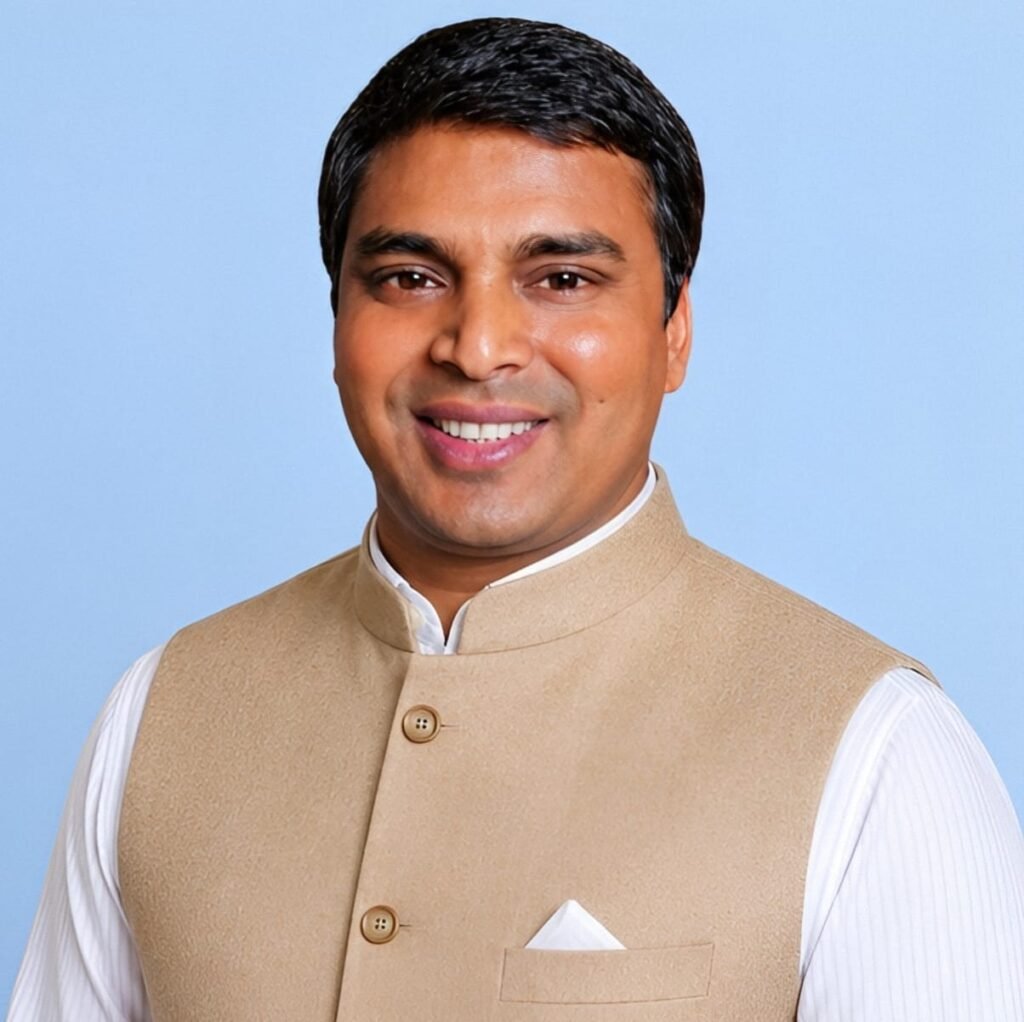
Madhurendra Kumar: The Indian Sand Artist Turning Sand, Leaves and Art into a Voice for Social Change
Madhurendra Kumar is an internationally recognized Indian sand artist, sculptor and visual artist whose journey reflects the power of creativity, perseverance and purpose. Born on 5 September 1994 in Barwakala, East Champaran, Bihar, Kumar grew up in financially difficult circumstances, yet transformed the sands of the Aruna River into the foundation of an artistic career that would eventually take him to international festivals, exhibitions and cultural events.
Today, Madhurendra Kumar is known not only for monumental sand sculptures but also for his innovative work with leaves, fruits, vegetables and other natural materials. His art frequently addresses environmental conservation, climate change, water conservation, public health, peace, national unity, humanitarian values and cultural heritage.
From Rural Bihar to the International Art Stage
Madhurendra Kumar’s story began far away from the conventional centres of India’s contemporary art world. Raised in a financially underprivileged family in East Champaran, he encountered economic challenges from an early age. His father, Shiv Kumar Sah, was a farmer, while his mother, Gena Devi, managed the household.
As a child, Kumar discovered art through the simplest materials available around him. The banks of the Aruna River became his natural studio, where he experimented with sand and clay to create miniature figures and sculptures.
This early connection with river sand eventually became central to his artistic identity. Rather than seeing limited resources as a barrier, Kumar turned his surroundings into creative possibilities.
His journey is therefore not simply about sand sculpture. It is also a story about how an artist can transform adversity, experimentation and determination into a distinctive artistic language.
Education and Formal Training in Fine Arts
Although his childhood was marked by financial hardship, Madhurendra Kumar continued his education and eventually pursued professional training in fine arts.
He studied at Mahatma Gandhi Kashi Vidyapith (MGKV), Varanasi, where he completed a Bachelor of Fine Arts (BFA) in Sculpture and a Master of Fine Arts (MFA) in Sculpture.
His education complemented the practical knowledge he had developed independently over the years. The combination of academic training and hands-on experimentation helped him develop his approach to sculpture, visual composition and public art.
He also pursued additional qualifications in painting, drawing, computer applications and other areas, reflecting a broader commitment to continuous learning and multidisciplinary artistic development.
When Sand Became More Than an Artistic Medium
For Madhurendra Kumar, sand is not simply a material used to create visually impressive sculptures. It has become a medium through which he communicates ideas.
His artworks have addressed themes ranging from environmental protection and climate change to water conservation, plastic pollution, cleanliness, public health, anti-drug awareness and voter participation.
He has also created works around women’s empowerment, patriotism, national unity, world peace, humanitarian values, wildlife conservation and cultural harmony.
This social dimension has become one of the defining characteristics of his artistic practice.
Instead of treating art purely as decoration, Kumar has used public installations and sculptures as tools for awareness and communication.
Recognition from Dr. A. P. J. Abdul Kalam
One of the significant moments in Madhurendra Kumar’s artistic journey came through recognition from former President of India Dr. A. P. J. Abdul Kalam.
The profile records that Kumar’s 45-foot sand sculpture, Sarva Dharma Shahadat, attracted attention in 2005. Later, in 2012, Dr. Kalam appreciated Kumar’s painting The Importance of Science in Building a Developed India and honored him for his creativity.
For the artist, the encouragement was particularly meaningful because it came during a period when pursuing art as a profession was not an easy choice.
An Artist with a Multidisciplinary Creative Practice
While Madhurendra Kumar is widely associated with sand art, his creative practice extends well beyond sand sculpture.
His artistic portfolio includes:
- Sand and coal-ash sculptures
- Marble, granite and metal sculptures
- Leaf artworks
- Fruit and vegetable carvings
- Micro-art
- Plywood and thermocol artworks
- Recycled art
- Visual and public awareness installations
The supplied profile records thousands of artworks across these disciplines, including more than 20,000 leaf artworks and thousands of fruit and vegetable carvings.
His leaf art is particularly distinctive. Using materials such as peepal leaves, pumpkins, watermelons and gourds, he creates detailed portraits and compositions that demonstrate precision and patience.
Taking Indian Sand Art to the World
Madhurendra Kumar has represented India at numerous international sand art festivals, exhibitions, championships and cultural events.
According to the supplied profile, he has participated in more than 75 international events across more than 25 countries. His documented international participation includes events in France, China, the United Kingdom, the United States, Singapore, Japan, Malaysia, Denmark, Germany, Sri Lanka, Russia, Italy, the Netherlands, South Korea, Bhutan, Spain, Oman and Australia, among others.
More recently, his international participation has included events in Germany, the United States, Turkey and Canada, where he represented India at international sand sculpture and art events.
This global journey has helped place Indian sand sculpture within a wider international cultural conversation.
Awards, Honours and International Recognition
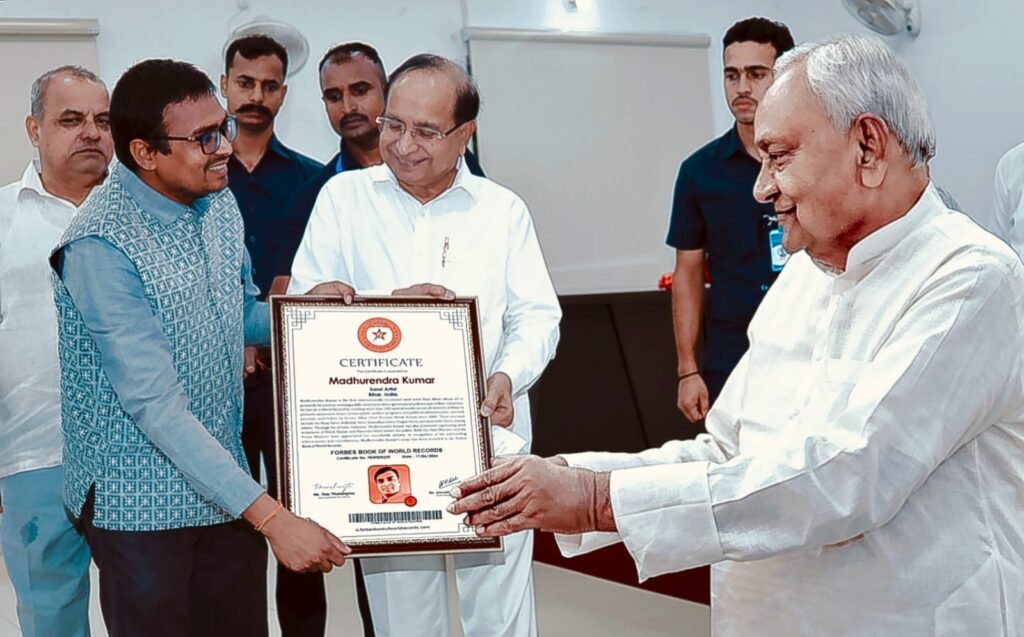
Over the course of his career, Madhurendra Kumar has received extensive recognition at regional, national and international levels.
His national recognitions include the Bihar Gaurav Award, Bharat Gaurav Samman, Rashtriya Gaurav Samman, Dr. B. R. Ambedkar National Award, National Kala Ratna Samman and several other honours listed in his profile.
His international recognitions include the Indo–Nepal International Golden Sand Master Award, Global Peace Ambassador Award, International Sand Art Festival Champion, and Best Sand Sculpture Artist of the Year in Bhutan.
The profile also records multiple world-record recognitions connected with his sand and leaf artworks. These include recognition for more than 5,000 unique sand artworks carrying positive social messages and more than 21,000 unique leaf artworks carrying positive social messages.
Art for Environmental and Social Awareness
A recurring feature of Madhurendra Kumar’s work is the use of visual art to communicate issues that affect society.
His sculptures have addressed:
- Climate change
- Global warming
- Water conservation
- Plastic pollution
- Wildlife protection
- Sustainable development
- Public health
- Peace
- Anti-terrorism awareness
- Democratic participation
- Humanitarian values
His international work has similarly focused on global awareness, including environmental conservation, wildlife protection, water conservation and sustainable development.
This approach gives his work a purpose beyond visual spectacle. A sculpture can attract attention, but a sculpture carrying a message can also encourage conversation.
Preserving Indian Culture Through Contemporary Art
Indian history, spirituality and cultural heritage form another important part of Kumar’s artistic expression.
His sculptures have depicted subjects including Lord Buddha, Lord Vishnu and his incarnations, Mahavir Jayanti, Mahatma Gandhi, national leaders, saints and other cultural figures.
By presenting traditional subjects through contemporary sculpture, Kumar combines cultural storytelling with modern public art.
This has also enabled his work to connect with audiences at tourism festivals, cultural events and national and international exhibitions.
A Journey Built on Perseverance
Behind the international recognition lies a journey shaped by economic hardship.
The profile records that Kumar undertook numerous forms of work to support his education, including agricultural labour, selling vegetables and snacks, painting houses and signboards, tailoring assistance, night security work and survey-related work.
During his college years, financial difficulties reportedly became so severe that he spent nearly six months sleeping in college corridors because he could not afford hostel accommodation.
When he could not afford conventional painting materials, he returned to sand—the material that had been part of his childhood. What began as a necessity eventually became the medium through which he built his identity as an artist.
Madhurendra Kumar and the Evolution of Sand Art in Bihar
Sand art is traditionally associated with India’s coastal regions, particularly Odisha. Madhurendra Kumar’s journey represents an alternative development of the art form through river sand in Bihar.
According to the supplied profile, his early experiments on the Aruna River helped establish river sand as a medium for artistic expression in Bihar. Over time, his large-scale sculptures along rivers such as the Ganga, Gandak, Kosi and Son helped expand the visibility of sand art within the state.
His participation in Bihar’s cultural and tourism festivals has further connected sand sculpture with public celebrations, heritage, tourism and social awareness.
Building a Legacy Beyond the Sculpture
Madhurendra Kumar’s contribution extends beyond individual artworks.
His profile describes an artistic practice that combines sculpture, environmental awareness, cultural preservation, education and public engagement. He has also conducted workshops and training programmes aimed at encouraging young artists to explore sand sculpture professionally.
His broader vision includes developing opportunities for art education, promoting Indian culture internationally and encouraging environmental awareness through creative expression.
The Future of Madhurendra Kumar’s Artistic Journey
The next phase of Madhurendra Kumar’s journey is focused not only on creating more art but also on building platforms that can help future generations of artists.
Plans associated with his profile include the development of a Sand Art Academy, promotion of Indian culture worldwide, environmental awareness initiatives, art education and the development of the Madhurendra Sand Art Institute.
Such initiatives could help transform his individual artistic journey into a broader educational and cultural legacy.
A Story of Art, Purpose and Resilience
Madhurendra Kumar’s journey from the rural landscape of East Champaran to international sand art festivals illustrates how artistic ambition can survive even under difficult circumstances.
From shaping figures in river sand as a child to creating large-scale sculptures for national and international audiences, his career has been defined by experimentation, perseverance and a commitment to meaningful themes.
His work demonstrates that sand can become more than a temporary material. In the hands of an artist, it can become a canvas for history, culture, environmental awareness and social change.
For Madhurendra Kumar, the journey is ultimately about transforming what is available into what is possible—and using art not merely to create something beautiful, but to make people stop, think and connect with a larger idea.