₹2000 a Day, Zero fuel Cost: The Electric Auto Revolution Queen EV Owners Don’t Want You to Miss- Lx Green.
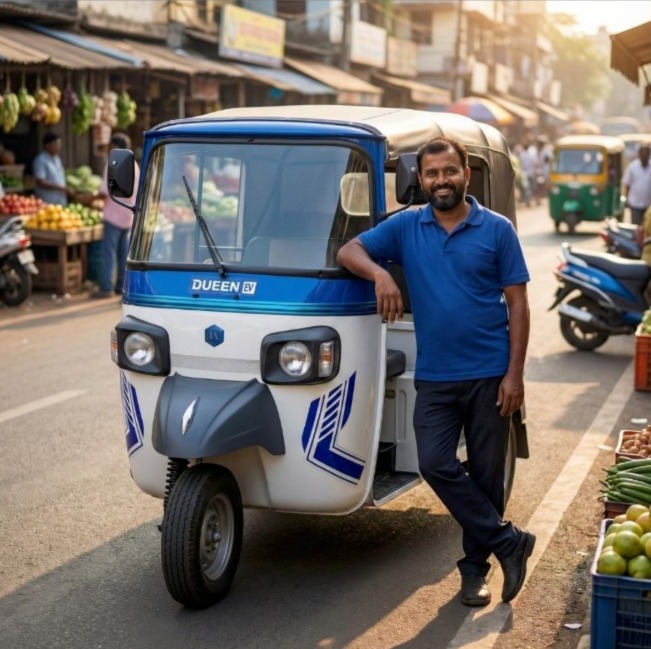
Electric Auto Revolution Queen EV Owners
The math is simple. The opportunity is big.
And surprisingly, many people are still late to notice it.
Raj Kumar didn’t wake up at 4 AM because he loved mornings. He did it because if he reached the CNG pump late, his day started in loss. Long queues in Faridabad, fuel first, tea later. By the time he hit the road, it was already 6 AM.
On good days, he earned ₹800–900. After fuel, repairs, and those regular “small” breakdowns, his monthly income barely touched ₹18,000.
That was his routine.
Today, Raj wakes up at 5:30 AM. He unplugs his electric auto at home and is on the road by 6. No fuel queues. No anxiety. His daily earnings now range between ₹1,800 and ₹2,200. Monthly take-home? Over ₹45,000.
What changed?
He switched to electric. And he switched to Queen EV from Luxus Green, Raj isn’t alone.
Luxus Green Making it Possible A Quiet Change on Indian Roads
Across India—from Bilaspur to Bengaluru—auto drivers are making this switch quietly. No announcements. No drama. Just practical decisions based on numbers. Number all over adjusting with built quality, exceptional battery duration range (130+ km), Front drum break and rare disk brake, and solid mechanism of working principle. Luxus covered all of it quietly.
They’ve done the math. They’ve chosen electric. And their earnings reflect it.
The Hidden Cost of “Affordable” CNG
CNG autos are often marketed as economical. But real-life numbers tell a different story.
A typical CNG auto runs about 25–30 km per kg. With prices hovering between ₹75–85 per kg, drivers spend ₹250–350 daily for 100–120 km.
Add regular servicing, oil changes, and frequent visits to the mechanic. Monthly reality for a CNG auto driver:
- Fuel: ₹8,000–10,000
- Maintenance: ₹2,500–3,500
- EMI: ₹8,000–10,000
- Total fixed cost: ₹18,500–23,500
That’s before savings. Before family needs. Before emergencies.
Electric Autos Change the Equation
Electric three-wheelers simplify the math. Monthly expenses usually look like this:
- Charging: ₹1,200–1,800/monthly
- Maintenance: ₹300–500/Yearly
- EMI: ₹7,000-7,500/monthly
- Total fixed cost: ₹9,000–11,800
That’s a saving of ₹9,500–11,700 every month. Over a year, that’s more than ₹1.2 lakh saved.
It’s Not Just About Saving Money
Here’s what drivers appreciate most—electric autos save time. No fuel queues.
No sudden engine trouble.
No breakdowns during peak hours.
Many drivers report gaining 2–3 extra productive hours daily. Meena Devi from Raipur, who runs a delivery route, puts it simply:
“पहले CNG में fदन में 15–16 चक्कर होते थे. अब 22–24 fडलीवरी हो जाती है. पैसा भी बचता है, कमाई भी बढ़ती है.”
That difference shows up directly in income.
The ROI Most People Miss
Consider financing a quality electric three-wheeler from an ISO-certified manufacturer like Luxus Green Mobility.
Approximate cost: ₹3–3.5 lakh
Down payment (with subsidy): ₹30,000–50,000
Year 1 impact:
- Monthly savings: ~₹10,000
- Extra earnings from uptime: ~₹5,000
- Net monthly benefit: ~₹15,000
- Annual gain: ~₹1.8 lakh
By month 24–30, many drivers finish EMIs. After that, the vehicle continues earning with minimal running cost.
Compare this with CNG—after three years, the vehicle often needs major repairs. Electric autos, meanwhile, remain low-cost assets with resale value.
The Quality Warning Drivers Should Hear
Not all electric autos are reliable.
The market has low-quality EVs that fail early, leaving drivers stuck with EMIs and no support. That’s why choosing an ISO-certified manufacturer with proper after-sales systems is critical.
Established players offer:
- Warranty-backed manufacturing
- Dealer service networks
- Spare part availability
- Financing support
Cheaper EVs often cost more in the long run.
Who’s Switching First?
Interestingly, the early adopters aren’t newcomers. They’re:
- Experienced auto drivers
- Delivery partners
- Small business owners
- Women entrepreneurs entering transport
People who calculate carefully and value stability.
The Bottom Line
The electric auto shift isn’t coming—it’s already here.
While some wait and debate, others are earning more, stressing less, and sleeping better, knowing tomorrow’s income won’t disappear at a fuel pump.
The real question isn’t, “Should I go electric?”
It’s simply, “How much longer can I afford not to?”
Ready to make the switch?
Call: 1800 891 2688
Visit: www.luxusgreen.com
Social Media : Facebook | Instagram | Youtube
“नये भारत का नया भरोसा“